Japan's Dementia Crisis: Could High-Tech Innovations Be the Beacon of Hope?
As Japan stands at the crossroads of a dementia crisis, a nation renowned for its technological prowess now turns to innovation to counteract its demographic dilemma. Every year, thousands of older citizens with dementia find themselves lost, exerting pressure on an already strained societal fabric. But amid this challenge, a new wave of high-tech solutions could soon serve as a beacon of hope.
The Growing Challenge
Japan’s situation is dire, with dementia cases leading to nearly 500 elderly deaths annually. Such numbers have doubled over the last decade, as reported by local police. What’s adding to the gravity is a diminishing workforce and stringent immigration policies that limit foreign caregiving assistance.
The impact is palpable: costs skyrocketing, and cries for intervention growing louder. Forecasts suggest that by 2030, dementia-related care costs will catapult to a staggering 14 trillion yen.
Embracing Technology: GPS Tags and Community Alerts
To address this, regions across Japan are experimenting with GPS-based tracking systems. Wearable tags detect when someone leaves a designated area, alerting authorities and, in some cases, even convenience store workers. These systems represent a community-driven safety net, where technology aids in rapid response and recovery.
The Rise of AI and Robotic Caregivers
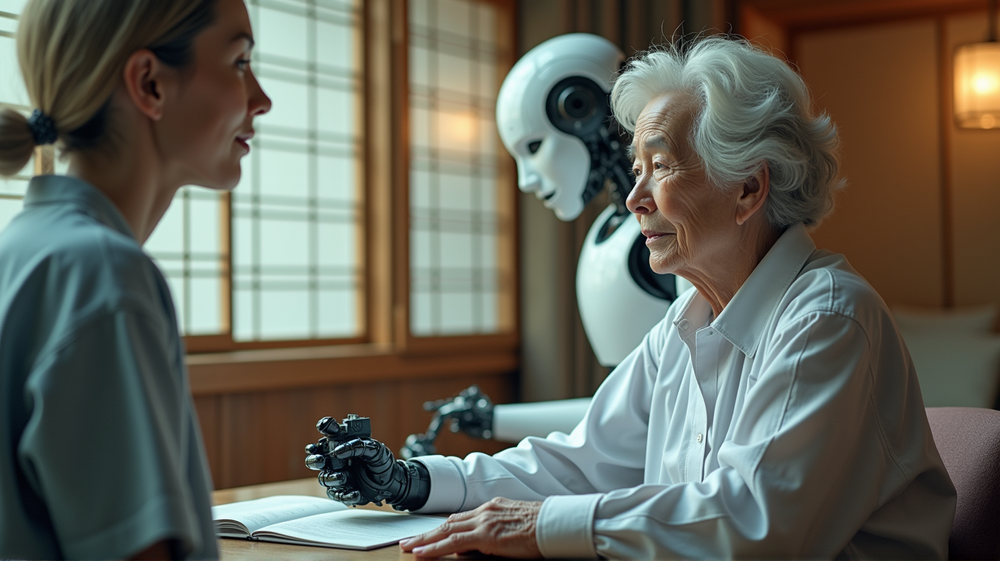
On the horizon is a revolution in caregiving: from AI detecting early dementia symptoms to humanoid robots offering daily living assistance. Fujitsu’s aiGait helps in identifying early indicators through advanced motion analysis, while Waseda University’s AIREC robot performs tasks like household chores, aspiring to prevent bedsores and offer an extra hand to caregivers.
“Early detection of age-related diseases is key,” states Hidenori Fujiwara from Fujitsu. Similarly, researchers emphasize the collaborative role of robots, like AIREC, in augmenting human effort rather than replacing it.
Emotional Connectivity: The New Frontier
Beyond physical assistance, emotional support emerges as a significant frontier. Tiny robots, like Sharp’s Poketomo, offer companionship to isolated seniors, softly bridging the gap between technology and human warmth. Meanwhile, the Restaurant of Mistaken Orders in Tokyo showcases how people with dementia can actively engage with society, fostering community bonds and promoting interaction.
Mr. Toshio Morita, a café server and dementia patient, shares, “Everyone’s different - that’s what makes it fun.” His sentiments echo the overarching philosophy: technology supplements human interaction, never substitutes it.
Blending Tradition with Innovation
As Japan sails through these turbulent waters, the synthesis of tradition and innovation becomes indispensable. Technology undoubtedly provides significant relief. However, meaningful engagement retains its irreplaceable essence, ensuring those with dementia lead enriched lives even in a challenging reality.
According to BBC, the advancements in technology and traditional human connections together may chart the path to managing this complex crisis.